Gloceps Webinar Series Week 7 highlights
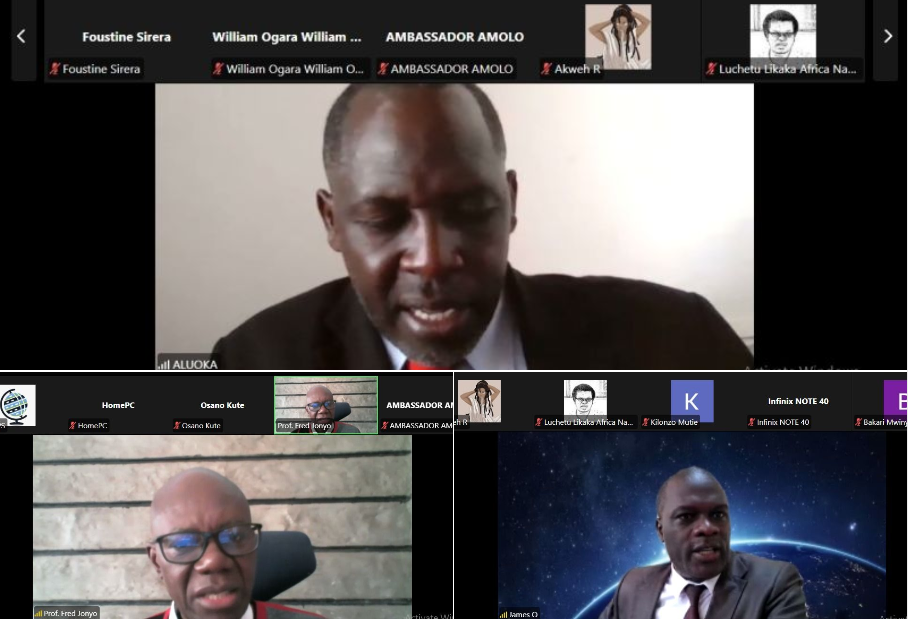
Week 7 of the GLOCEPS Webinar Series on Institutionalizing the Legacy of Rt. Hon. Raila Odinga: Constitutionalism, Democratic Reform, and AU Agenda 2063 delivered a focused discussion on leadership, institutional resilience, and sustainable democratic transformation in Africa.
Dr. Caroline Sambai, on behalf of Brig. (Rtd) Wilson Boinett, opened the session by underscoring a central premise: enduring democratic progress rests not on individuals but on strong, rules-based, citizen-centered institutions.
Dr. Kenedy Asembo reinforced this perspective by emphasizing alignment between research, policy, and practice, ensuring scholarship strengthens governance systems and institutional accountability across Africa.
Papers Presented
Institutionalising the Legacy and Leadership of Raila Amolo Odinga: Democracy, Constitutionalism, and Africa’s Transformation, by Osano Kute, examined how Kenya’s 2010 Constitution, devolution, and Odinga’s advocacy on AfCFTA and digital transformation provide a framework for structural and economic change.
Charisma, Coercion, or Strategic Misjudgment: Personal Traits in Contemporary Mass Leadership in Africa and the Political Dynamics of Dr. Raila Amolo Odinga, by Amb. Dr. Akinyi Odinga Walkowa and Otieno Aluoka analyzed how charisma, coercion, and judgment shape political outcomes.
Key Insights from Discussants
Amb. Tom Amolo, Prof. Fred Jonyo, and Dr. James Olela called for greater analytical rigor, clearer methodology, stronger institutional focus, contextualized assessment across political periods, and evidence-based analysis.
The session, skillfully moderated by Prof. Daniel Orwenjo, concluded with reflections from Mr. Samuel Otieno, highlighting three takeaways: constitutional reforms must outlast leaders; charisma requires accountability; and interdisciplinary scholarship and documentation are essential.
As GLOCEPS consolidates these insights, a critical question emerges. Beyond one leader, what do these methods reveal about strengthening democratic governance in Africa?The series remains open to scholars, policymakers, and the public, with selected papers to be published later this year. This ongoing dialogue continues to bridge theory and practice, informing policy debates and strengthening Africa’s institutional futures through sustained intellectual engagement