
GLOCEPS – Week Series 9
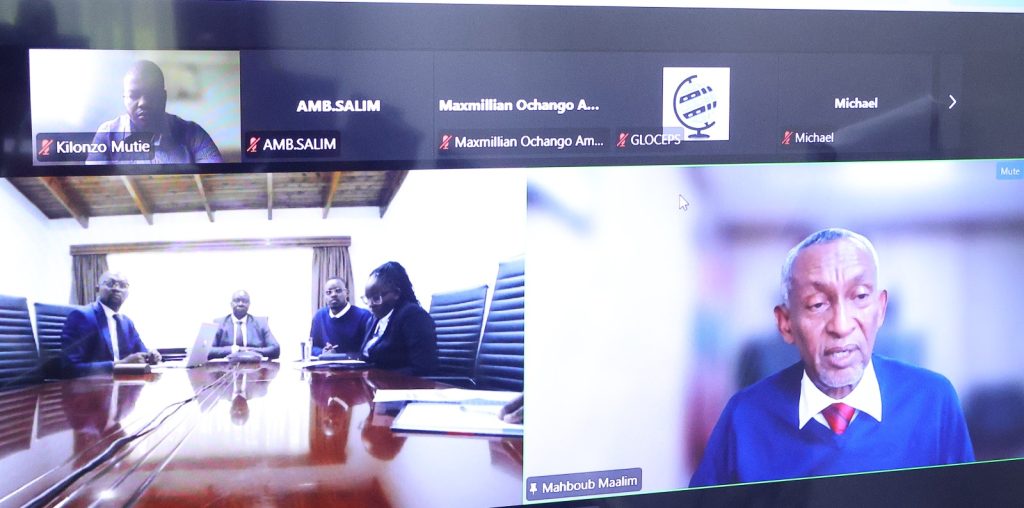
Week 9 of the GLOCEPS Webinar Series on Institutionalizing the Legacy of Rt. Hon. Raila Odinga: Constitutionalism, Democratic Reform, and AU Agenda 2063 explored how leadership, governance frameworks, and continental infrastructure ambitions shape institutional resilience and sustainable democratic transformation in Africa.
Amb. (Eng) Mahboub Maalim, speaking on behalf of Brig. (Rtd) Wilson Boinett, emphasized that democratic transformation must be anchored in strong institutions, civic participation, and rules-based governance rather than personalities.
Dr. Kenedy Asembo reinforced the need to align research, policy, and practice to strengthen governance and accountability across Africa.
Papers Presented
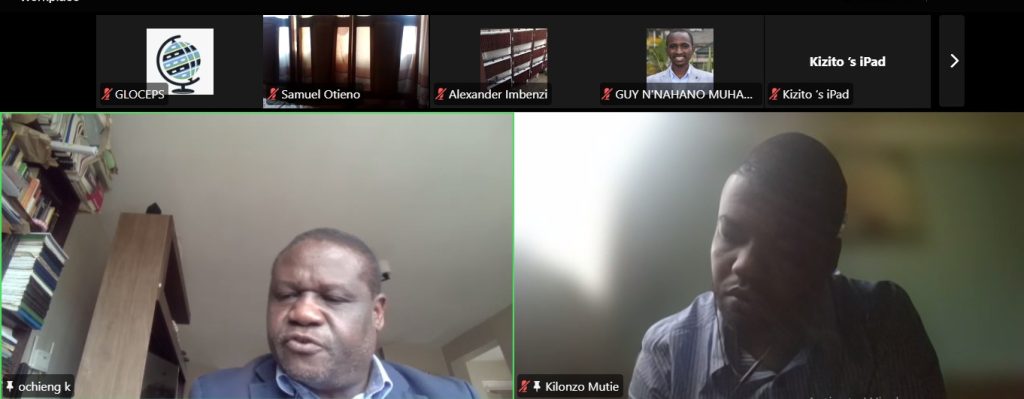
The Roadmap to Achieving AU Agenda 2063 through Localised Frameworks on Good Leadership, Governance, and Policymaking, by Maxmillian Ochango & Kilonzo Mutie, examined how localized governance frameworks can advance AU Agenda 2063 through stronger leadership, constitutionalism, and policymaking.
The Political Economy of Connectivity: Examining the Tension Between Raila Odinga’s Continental Infrastructure Vision (PIDA/AfCFTA) and the Dynamics of Political Patronage, by Beatrice Mbinya explored the tension between Raila Odinga’s continental infrastructure vision and political patronage dynamics affecting regional integration and connectivity.
Key Insights from Discussants
Discussants including Amb. Salim Salim, Dr. Kizito Sabala, Dr. Ochieng Kamudhayi, and Dr. Janet Kiguru, called for stronger methodology, institutional focus, contextual analysis, and evidence-based scholarship. Their reflections emphasized the need for more critical analysis linking governance reforms, socio-political dynamics, and institutional implementation to the broader aspirations and practical realization of AU Agenda 2063.
The session, skilfully moderated by Michael Owuor, concluded with reflections from Prof Mohamud Jama, who stressed that achieving Agenda 2063 requires aligning continental ambitions with effective domestic institutions capable of translating vision into implementation.
The series remains open to scholars, policymakers, and the public, with selected papers to be published later this year. This ongoing dialogue continues to bridge theory and practice, informing policy debates and strengthening Africa’s institutional futures through sustained intellectual engagement.