
Week 8 of the GLOCEPS Webinar Series on Institutionalizing the Legacy of Rt. Hon. Raila Odinga: Constitutionalism, Democratic Reform, and AU Agenda 2063 delivered a forward-looking conversation on infrastructure transformation, Pan-African leadership, and the unfinished project of democratic institutionalization in Africa beyond individual political personalities.
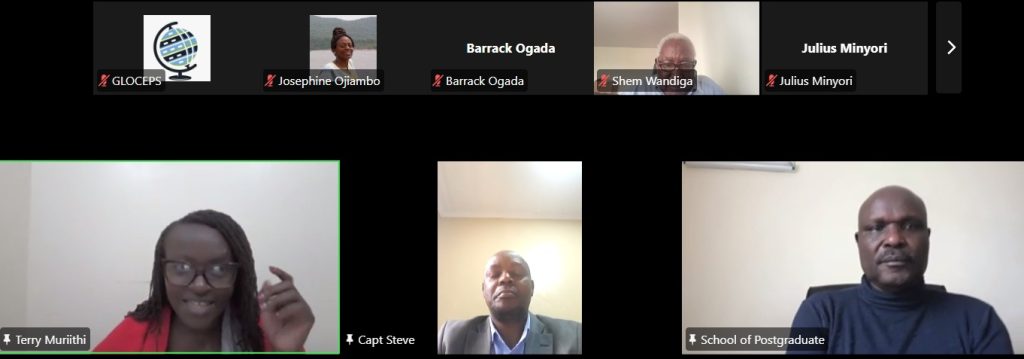
DG (Rtd) Alexander M. Imbenzi, Member of the GLOCEPS Council of Advisers, delivered the opening remarks on behalf of Brig. (Rtd) Wilson Boinett. He underscored a central premise of the discussion: sustainable democratic transformation cannot depend solely on influential personalities, but must be anchored in resilient institutions, civic participation, and rules-based governance systems.
Dr. K. O. Asembo, Executive Director of GLOCEPS, reinforced this perspective by emphasizing continuity between previous engagements and the eighth session, ensuring cumulative learning that bridges academic inquiry with practical policy relevance.
Papers Presented
Amplifying Pan-African Voice: A Postmodernist Shift in Infrastructure Development for Africa, presented by Prof. Edmond Maloba Were, PhD, examined how Raila Odinga’s Afro-optimist vision and advocacy have shaped continental conversations on integrated infrastructure corridors, regional connectivity, and strategic investment as key pillars for realizing Agenda 2063.
Unfinished Dreams: Institutionalizing Raila Odinga’s Vision for Kenya and Africa, presented by TerryRuth Wanjiku Muriithi, reflected on Odinga’s enduring commitment to constitutionalism, multiparty democracy, devolution, and inclusive governance. The paper argued that his legacy remains an unfinished project requiring sustained civic education, institutional accountability, and meaningful youth participation.
Key Insights from Discussants
Amb. Dr. Josephine Ojiambo, PhD, Dr. Peter Kirui, PhD, Dr. Evans Onyango, PhD, and Maj. (Rtd) Beautah Mwanza Suba, SS, emphasized the importance of integrated infrastructure corridor approaches, credible sectoral voices to champion continental development, and the need to embed democratic values within governance institutions rather than personality-driven politics.
The session, skillfully moderated by Mr. Stephen Kiema, concluded with reflections from Col. (Rtd) Julius Minyori, MBS, who highlighted three key takeaways: Africa requires visionary voices capable of mobilizing infrastructure investment; democratic reform remains an unfinished project demanding institutional vigilance; and young people must be empowered as custodians of constitutionalism and democratic renewal.
As GLOCEPS consolidates these insights, a critical question emerges: beyond individual leaders, how can Africa identify, nurture, and sustain credible sectoral voices capable of advancing infrastructure transformation, democratic consolidation, and continental integration?
The series remains open to scholars, policymakers, and the wider public, with selected papers scheduled for publication later this year. Through sustained intellectual engagement, the dialogue continues to bridge theory and practice while contributing to policy debates and strengthening Africa’s institutional futures.