
GLOCEPS joins African leaders to call for stronger African unity amid rising Afrophobia to ease migration tension
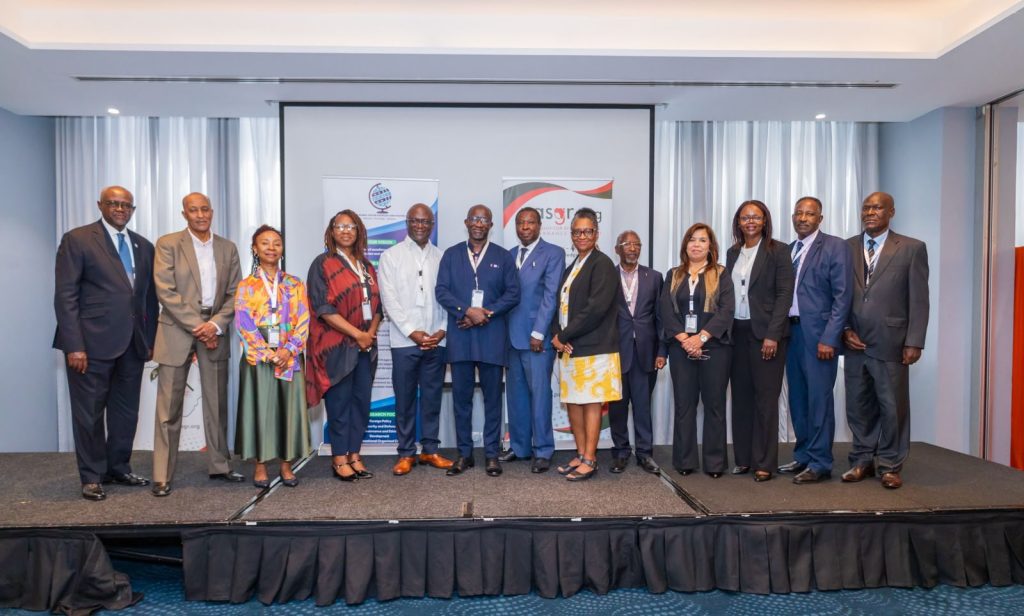
Across Africa, a recurring wave of Afrophobia exposes a troubling contradiction between the continent’s aspiration for unity and the hostility Africans face within their own borders. As the African Union (AU) advances Agenda 2063 and the African Continental Free Trade Area (AfCFTA), discrimination and violence threaten the ideals of Pan-African solidarity.
In its commitment to advance African integration, the Global Centre for Policy and Strategy (GLOCEPS) joined the Partnership for African Social and Governance Research (PASGR) to convene a high-level dialogue in Nairobi, Kenya on 20th November 2026. The meeting explored governance, citizenship, and continental integration as pathways to overcoming Afrophobia.
Held under the theme “Overcoming Afrophobia in Africa: Governance, Citizenship and the Future of Continental Integration,” the dialogue brought together scholars, diplomats, policymakers, migration experts, Pan-African advocates, and emerging African leaders. The dialogue provided a platform for evidence-informed discussions on the root causes of Afrophobia and the development of sustainable policy responses. Participants examined the phenomenon not merely as individual prejudice, but as a governance challenge threatening Africa’s integration ambitions. Recurring anti-migrant hostility, exclusionary administrative policies and forced repatriations across the continent have exposed a widening gap between Pan-African commitments and lived realities.
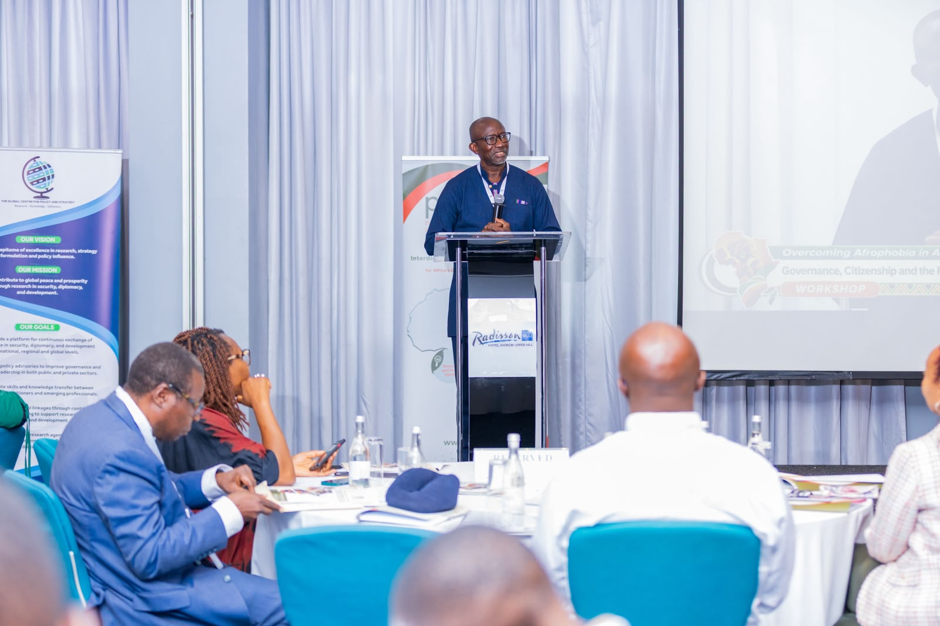
Prof. Fadel Ndiame, PhD, Executive Director at PASGR delivering his opening remarks during the event. Photo: Faraji Media
Delivering his opening remarks, Prof. Fadel Ndiame, PhD, Executive Director at PASGR, challenged participants to bridge the gap between continental commitments and national practice. Drawing on the philosophy of Ubuntu (Utu in Swahili which means humanity), he emphasised that national sovereignty and continental integration are not competing ideals. While states have the right to manage their borders, they also have a responsibility to protect everyone within them, regardless of nationality.
Prof. Ndiame described Afrophobia as a “governance stress signal” emerging where citizenship is weak, social protection is inadequate, cities outgrow their services, borders are policed but labour markets are not governed. When governments cannot deliver promised opportunities, neighbouring populations become scapegoats for structural problems. His analysis shifts attention from migrants as causes of hardship to institutional conditions that make communities vulnerable to insecurity and political mobilisation.
The challenge is visible across the continent. Throughout 2026, anti-migrant violence escalated in South Africa, with incidents of Afrophobia also reported in Kenya, Nigeria, Ghana, Zimbabwe, Ivory Coast and Tanzania. Driven by economic distress, weak governance and political instability, intra-African migration continues to expose people to discrimination and hostility. Meanwhile, the AU response has largely been confined to statements urging member states to uphold the African Charter on Human and Peoples’ Rights (ACHPR), attracting criticism over the gap between its continental commitments and practical action.
Despite commitments to continental solidarity, initiatives such as the AU Protocol on Free Movement of Persons, the proposed single African passport and AfCFTA remain constrained by restrictive policies, fragmented borders and economic barriers. If left unchecked, Afrophobia threatens decades of efforts towards African unity. Reiterating the importance of Ubuntu, Prof. Ndiame argued that integration need not undermine national sovereignty, stressing that “A state’s legitimacy is bound up in whether everyone living within its borders can flourish, regardless of the colour of their passport or whether they arrived yesterday.”
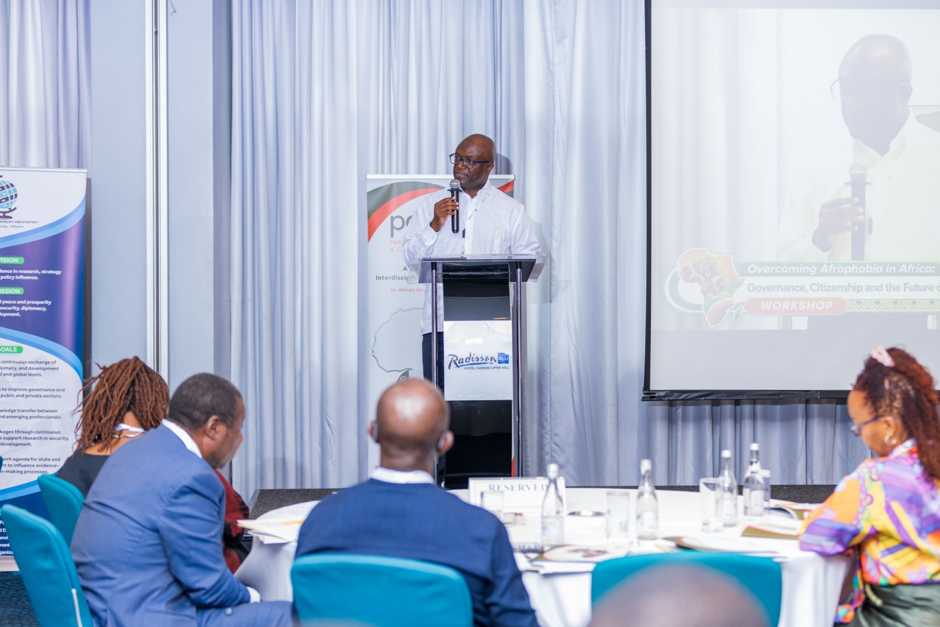
Prof. Gerald Ouma, PhD, PASGR Board Chair delivering his keynote address during the event. Photo: Faraji Media
Echoing the ideals of shared African identity, Prof. Gerald Ouma, PhD, PASGR Board Chair, drew on former South African President Thabo Mbeki’s 1996 “I am an African” address, delivered during the adoption of South Africa’s Constitution. He emphasised that Africa’s shared histories, struggles and aspirations must extend beyond national borders and find expression in inclusive institutions, laws and everyday practices.
“We cannot claim the heritage of an African civilisation that gave humanity its origins while denying fellow Africans their dignity of belonging to the continent,” Prof. Ouma said, urging participants to make African solidarity real in our institutions, policies and everyday relationships.
Beyond governance and citizenship, the dialogue examined the economic inequalities and structural challenges that contribute to Afrophobia. Economic exclusion, prolonged poverty and youth unemployment were identified as critical drivers of anti-migrant hostility, with foreign nationals often becoming scapegoats for inadequate public services, limited employment opportunities and unequal wealth distribution. Speakers urged African leaders to move beyond basic job creation towards building inclusive economies where young people can actively participate and share in the continent’s prosperity.
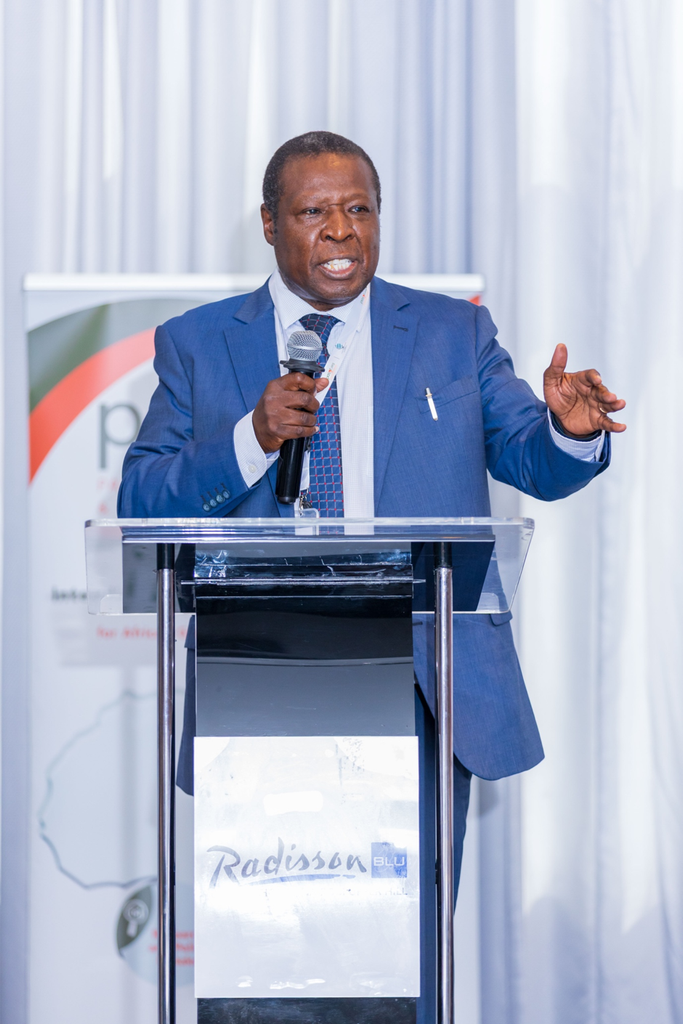
Keynote speaker, DG (Rtd) Alexander M. Imbenzi and member of the GLOCEPS Council of Advisors delivering his speech during the event. Photo: Faraji Media
Addressing participants, the keynote speaker, DG (Rtd) Alexander M. Imbenzi and member of the GLOCEPS Council of Advisors, recalled that the transformation of the Organisation of African Unity (OAU) into the AU in 2002 renewed the continent’s ambition for integration, peace and shared development. However, he challenged African leaders to translate these historical ideals into practical institutions, policies and partnerships.
Imbenzi argued that Africa must move beyond raw commodity exports towards industrialisation that prioritises local value addition, technology transfer, skills development and job creation. He called for African countries to negotiate collectively with external powers over critical minerals, ensuring that the continent’s resources contribute to resilient economies and improved living standards rather than enriching a narrow elite.
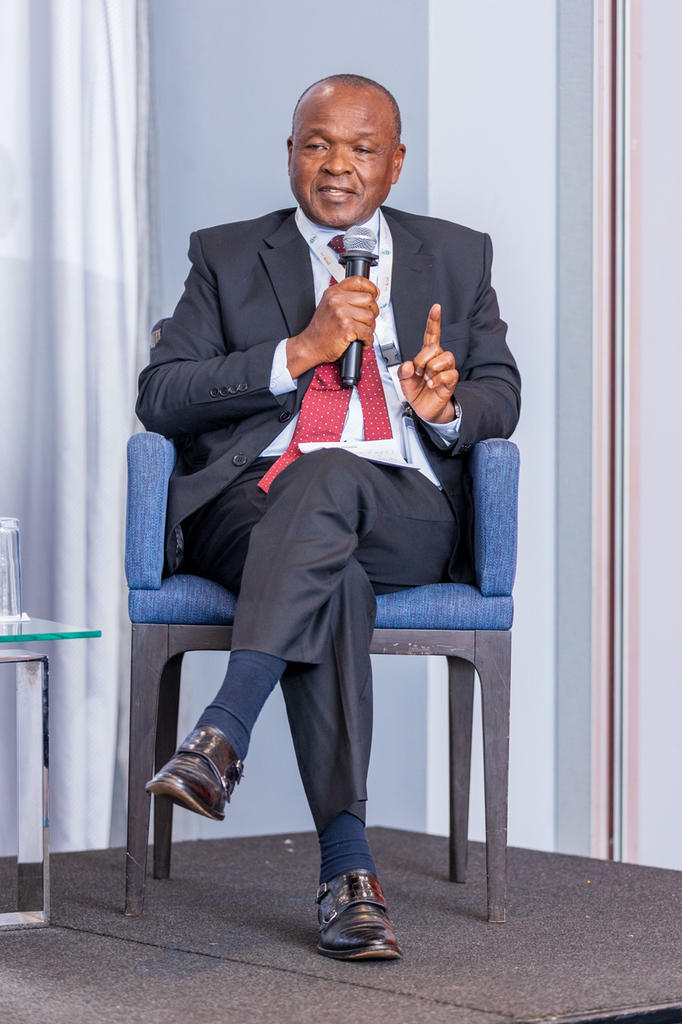
Amb. Erastus Mwencha, former Secretary-General of COMESA and former Deputy Chairperson of the AU Commission making his presentation at Round Table Dialogue on “Priority ideas from the labs and expert opinion: what needs to be done.” Photo: Faraji Media.
Addressing this gap, Amb. Erastus Mwencha, former Secretary-General of COMESA and former Deputy Chairperson of the AU Commission, emphasised that individual African markets are too small to support meaningful industrialisation. Citing Europe’s early coal and steel cooperation and the joint development of Airbus, he urged African countries to overcome market fragmentation through collective industrial projects and mobilise an estimated US$4 trillion in domestic African funds to finance self-reliant development.
Participants noted that AfCFTA, the AU Protocol on Free Movement of Persons and Agenda 2063 remain indispensable frameworks for continental integration. However, their potential continues to be constrained by weak institutions, fragmented policies and inadequate coordination among member states. They stressed that while trade frameworks facilitate the movement of goods, Africa’s development also depends on the free movement of people, skills and ideas.
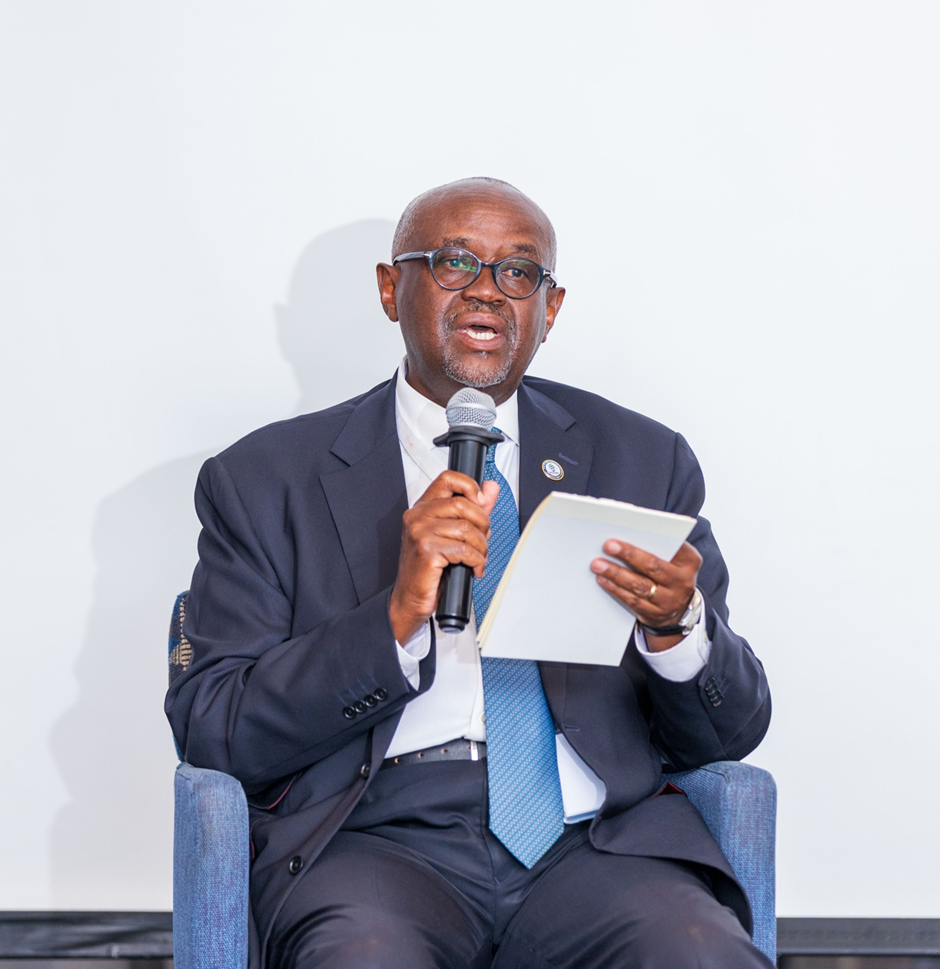
Amb. Solomon Maina, former Ambassador to Japan and GLOCEPS Non-Resident Research Fellow making his presentation at Round Table Dialogue on “Priority ideas from the labs and expert opinion: what needs to be done.” Photo: Faraji Media.
Amb. Solomon Maina, former Ambassador to Japan and GLOCEPS Non-Resident Research Fellow, noted that the challenge extends beyond facilitating cross-border movement to how governments manage migration, communicate national priorities, respond to economic realities and protect foreign nationals. He further stressed that governments cannot credibly champion Pan-African solidarity abroad while tolerating institutional decay, state brutality, and the mistreatment of citizens within their own borders.
The dialogue also examined the growing influence of digital platforms in shaping public perceptions of migration and foreign nationals. Social media monetisation and artificial intelligence can accelerate fabricated anti-migrant narratives, while inadequate moderation in African languages allows hate speech to circulate. Speakers called for stronger engagement with technology companies, investment in African-language content moderation tools and greater public digital literacy to encourage information verification before sharing.
Identifying possible pathways towards stronger continental solidarity, participants called on the Regional Economic Communities (RECs) and the AU should strengthen coherence between national, regional and continental commitments on migration, labour mobility and free movement. They emphasised the need for capable institutions, coordinated policies and sustained cooperation to ensure that continental integration translates into tangible benefits for African citizens.
As the dialogue concluded, participants reaffirmed that the future of Pan-Africanism depends on translating solidarity into institutions, policies, and everyday relationships that uphold the dignity of every African. For GLOCEPS and its partners, the dialogue signalled a renewed commitment to turning Pan-African ideals into practical action.
Watch the Full Event on our Official YouTube page:
Part 1:https://www.youtube.com/live/OWn4lpbxGM0?si=1vYGihGmPIWF3opS
Part 2: https://www.youtube.com/live/vKxJ3m3zVcE?si=_yDg02LP-V7fDWVT
To watch the video highlight: https://www.youtube.com/watch?v=WlrccyrcHIY