Gloceps Webinar Series: Gloceps Council Member (Eng.) Amb. Mahboub M. Maalim Opens Week 2 Of Institutionalizing The Raila Odinga Legacy For The Africa We Want
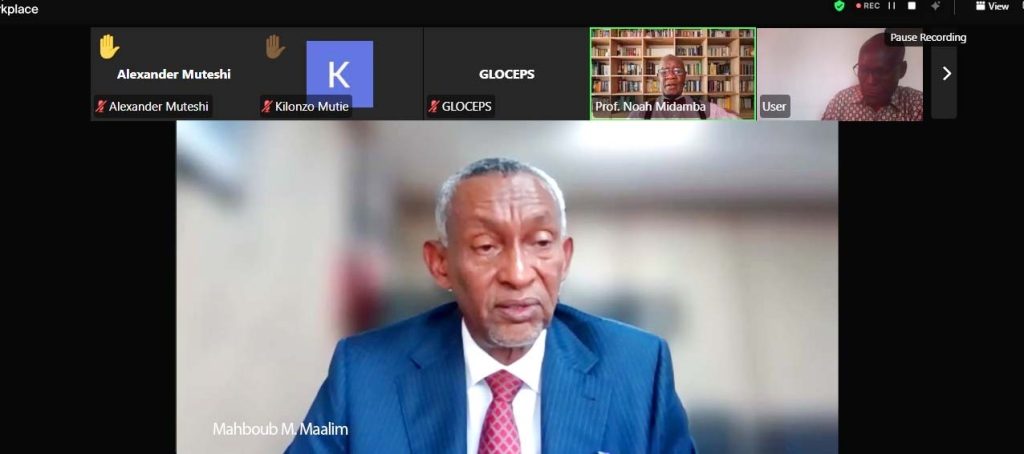
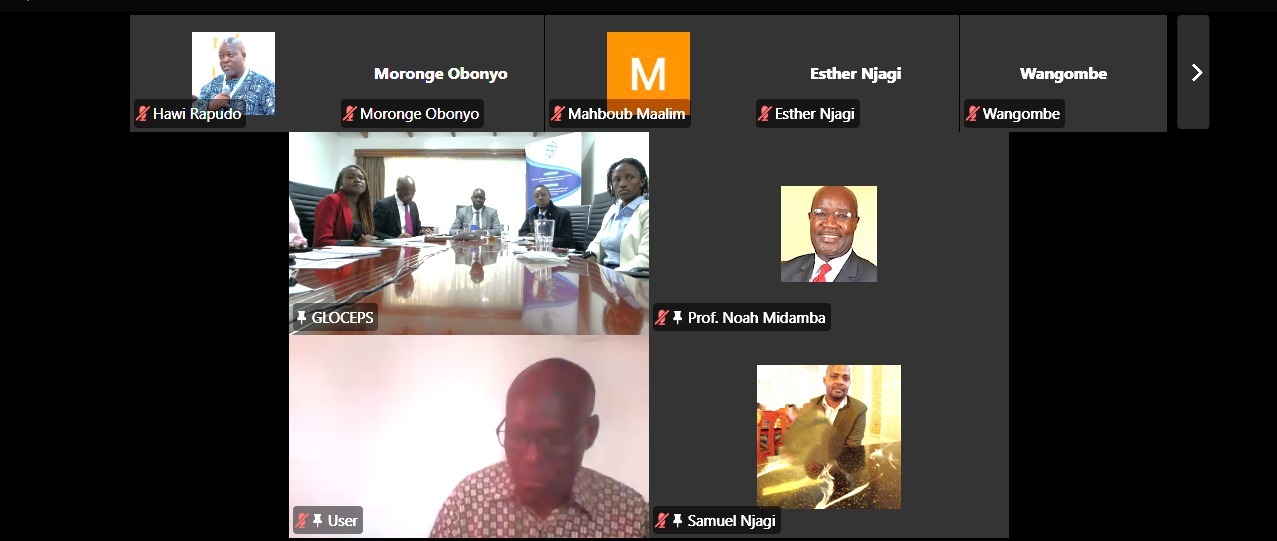
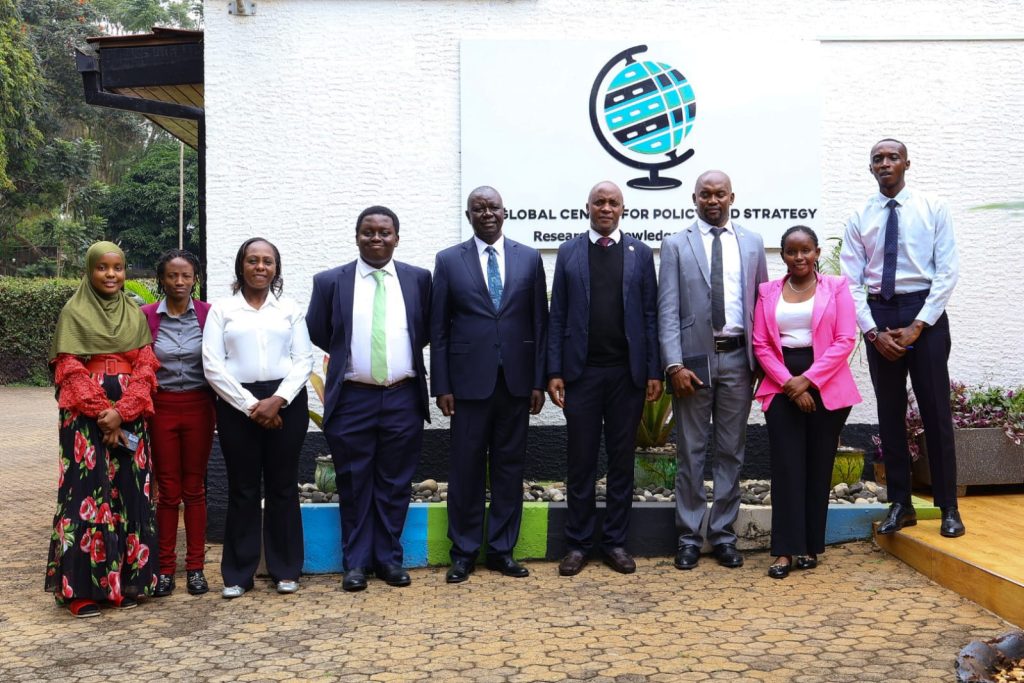
GLOCEPS Council member, Amb. (Eng.) Mahboub M. Maalim, CBS, OGW, C ENG, FIEK, representing Council Chair Brig. (Rtd) Wilson Boinett, MGH, CBS, opened Week 2 of the ten-week webinar series on 1 April 2026. The series, Institutionalizing the Raila Odinga Legacy: Constitutionalism, Democratic Reform, and the Realization of African Union Agenda 2063, provides a platform for advancing dialogue on governance resilience, institutional reform, and ethical leadership across Africa.
Amb. Maalim emphasized Raila Odinga’s enduring relevance in translating reform struggles into strong institutions that deliver accountability, inclusion, and long-term development. GLOCEPS Executive Director Kenedy Asembo, reflecting on the inaugural paper by Fred Jonyo and Philip Kaudo, emphasized that reconciliation in fragile political systems is rarely purely normative. Rather, it is often a strategic response shaped by institutional weaknesses, electoral uncertainty, and the demands of political survival. He cautioned that stability without accountability can entrench elite bargains at the expense of citizen-centered governance. These perspectives framed the Week 2 discussions under the theme “The Foundation: Democracy, Governance, and Institutional Reform.”
The first paper, presented by Dr. Samuel Mwiti Njagi of NIRU, Kenya and discussed by Dr. Mumo Nzau and Salim Ahmed Salim, examined whether devolution in Kenya has delivered on its promise. While decentralization has expanded participation and improved service delivery in some areas, it has also localized corruption, reinforced elite capture, and sustained fiscal dependency. Drawing on the Building Bridges Initiative and comparative lessons from South Korea and Singapore, participants emphasized that progress depends on accountable leadership, active citizen oversight, and strong institutional capacity.
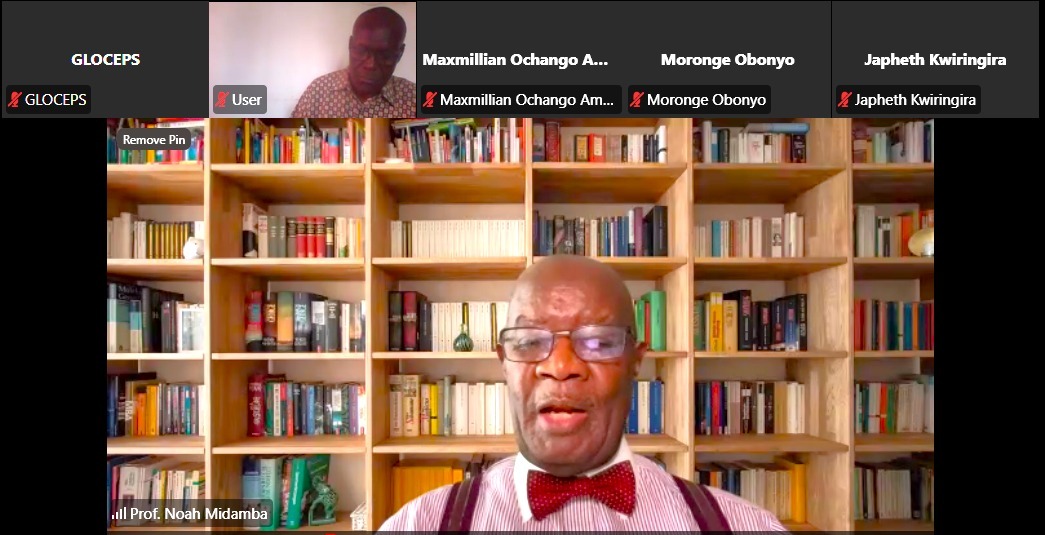
The second paper, presented by Isaac Aliowaku and Dr. Japheth Kwiringira of Kyambogo University, Uganda, with discussants Moronge Obonyo and Prof Noah Midamba, explored constitutionalism in an era of populism. The discussion highlighted how opposition-led mobilization can strengthen judicial independence, electoral accountability, and institutional resilience, while also raising concerns about balancing populism with constitutional order and sustaining reforms beyond political cycles.
In closing, Solomon Maina reaffirmed the series’ goal of translating Raila Odinga’s intellectual legacy into actionable policy insights that strengthen governance systems across Africa. Moderated by GLOCEPS Senior Research Fellow Sam Otieno, the discussions converged on a central insight:
👉 Sustainable reform is not event-driven; it depends on strong institutions, political will, fiscal autonomy, and continuous citizen engagement.
As the series progresses, GLOCEPS remains focused on translating reform ideas into practical, scalable governance solutions to anchor Africa’s long-term transformation under Agenda 2063. The weekly sessions continue to advance dialogue on institutionalizing reform traditions essential to realizing The Africa We Want.