
STRATEGIC DIALOGUE BETWEEN GLOCEPS AND NDU-K TO ADVANCE EVIDENCE-BASED SECURITY COLLABORATION
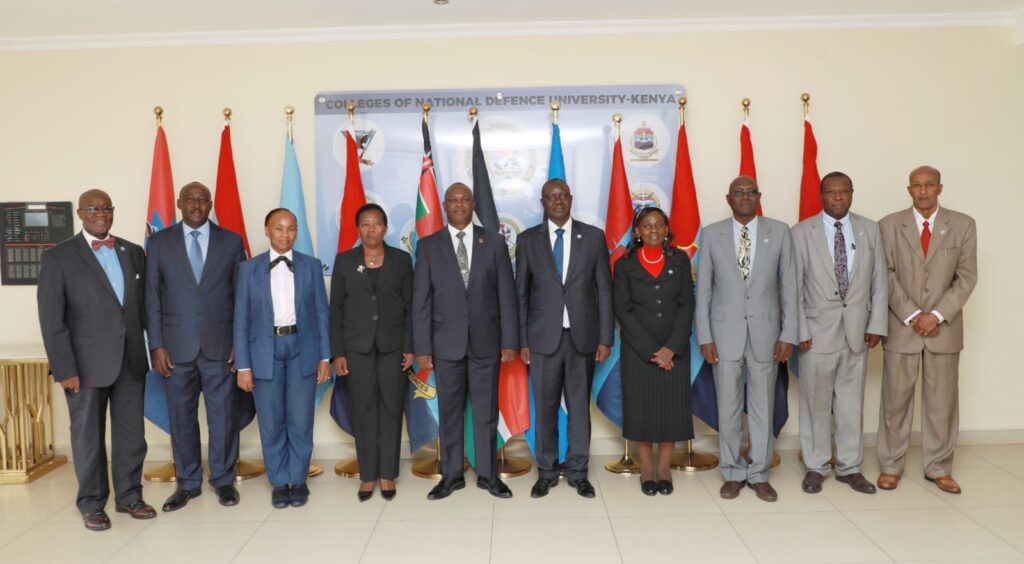
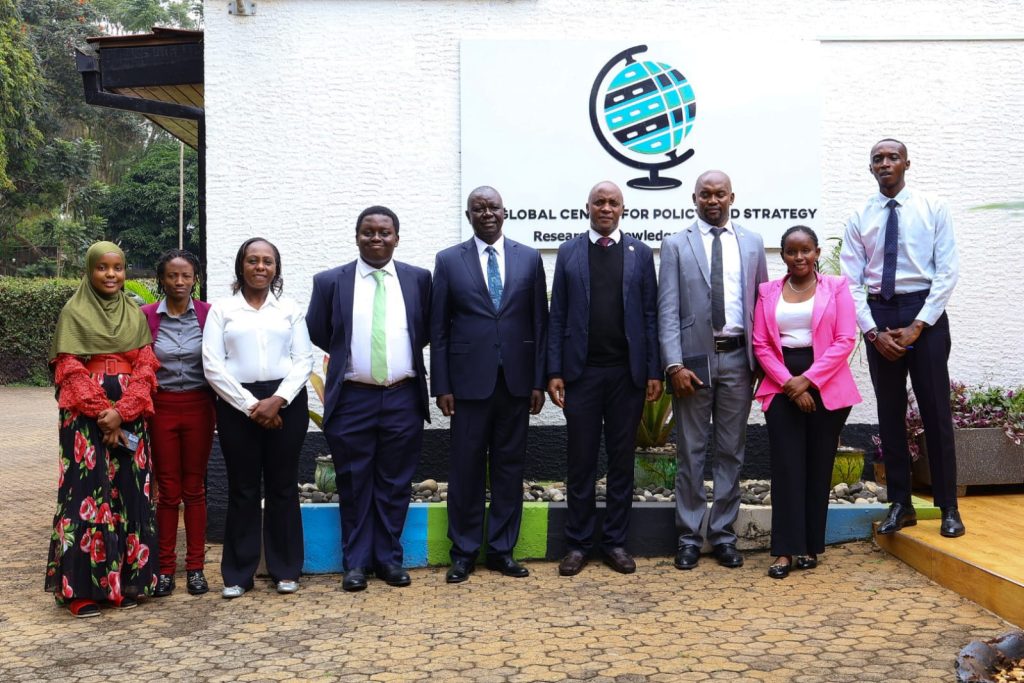
On 24 February 2026, a high-level delegation from the Global Centre for Policy and Strategy (GLOCEPS), led by Brigadier (Rtd) Wilson Boinett, Chairperson of the GLOCEPS Council of Advisors, held a strategic dialogue with the National Defence University–Kenya (NDU-K), Centre for Security and Strategic Studies (CSSS), under the leadership of Vice Chancellor Lieutenant General David Tarus. The engagement focused on deepening institutional collaboration in research, policy development, and capacity building across the defence and security sector. This inaugural dialogue marks a significant milestone toward formalizing structured cooperation between academia and policy research platforms in support of evidence-based national and regional security solutions.
During the engagement, the GLOCEPS delegation received a comprehensive briefing on NDU-K’s mandate, organizational architecture, and strategic positioning within Kenya’s defence and security ecosystem. The University reaffirmed its role as the national apex institution for professional military education and applied strategic research, underscoring its contribution to policy formulation, strategic planning, and regional security discourse. In turn, NDU-K leadership was briefed on GLOCEPS’s mandate as an action-oriented think tank established in 2020 to advance global peace and prosperity through diplomacy, security, and development. The Centre’s five-pillar research architecture is designed to address complex and converging risks across Eastern Africa.
The Vice Chancellor emphasized that the increasingly multidimensional security environment demands sustained, results-oriented partnerships capable of translating knowledge into actionable policy solutions. Priority collaboration areas identified included hybrid research, joint symposia, leveraging science, technology, and innovation for policy incubation, and internationalizing research through GLOCEPS’s global networks. The Deputy Vice Chancellor, CSSS, Major General Joyce Sitienei, further underscored the centrality of institutional partnerships in strengthening strategic foresight, policy analysis, and decision-support capabilities.
On its part, the GLOCEPS Council Chair commended NDU-K’s growing stature as a regional centre of excellence and highlighted the partnership’s potential to expand high-impact research networks and strategic dialogue platforms. The GLOCEPS Executive Director, Dr. Kenedy Asembo, outlined the Centre’s strategic niche and partnership model, while Senior Associate Ambassador Dr. Josephine Ojiambo presented the proposed collaboration framework anchored within the GLOCEPS Eastern Africa Hub of Excellence (GLESTAFHE).
The dialogue was anchored on a shared commitment to advancing strategic thought leadership and strengthening evidence-based decision-making on matters of national security. Both institutions affirmed the value of synergizing NDU-K’s security expertise with GLOCEPS’s policy research and analytical capabilities to generate practical national and regional security solutions.
The engagement produced a clear implementation pathway aligned with the strategic priorities and operational niches of both institutions. For GLOCEPS, the outcomes align with the four-pillar framework of the GLOCEPS Eastern Africa Hub of Excellence (GLESTAFHE). Under the Policy Researchpillar, the institutions will undertake hybrid research initiatives that leverage complementary strengths to address national and regional security challenges and enhance security strategy formulation and strategic analysis. Under the Strategic Leadership pillar, the partners will co-deliver professional dialogue programmes—including symposiums, webinars, workshops, and roundtables—and advance the internationalization of joint research and policy products. Within the Science, Technology, and Innovation pillar, the institutions are committed to deepening collaboration on multidimensional national, regional, and global challenges.
Overall, the NDU-K–hosted engagement reflects a strategically guided, leadership-driven partnership with strong potential to generate practical, evidence-based solutions that reinforce governance, strategic leadership, and peace and security across Kenya and the wider Eastern Africa region.
Read more here